Thinking about trading a Cambridge condo or smaller home for more space? Lexington is one of the first towns many move-up buyers consider, and for good reason. You can usually find more detached-home options, more land, and a more suburban single-family layout than you will in the inner core, but you are still shopping in a high-cost market with limited room for shortcuts. This guide breaks down what you should know about Lexington’s single-family options, how the housing stock compares with Cambridge, and what that move may realistically look like for you. Let’s dive in.
Why Lexington draws move-up buyers
Lexington is, at its core, a single-family market. The town’s 2025 housing assessment says 82% of housing units are single-family homes, which is a major contrast with more condo- and multifamily-heavy communities closer to Boston.
If you are moving up from Cambridge or another close-in market, that matters right away. It means your search is more likely to include detached houses, private yards, and a wider range of lot sizes than what you may be used to in the city.
That said, Lexington is not a bargain suburb. The same housing materials describe a market with affordability pressure, especially for younger households, so the move-up conversation here is usually about space, housing type, and long-term fit, not simply finding a cheaper home.
What kinds of single-family homes you’ll see
Lexington’s housing stock spans several eras, and that gives buyers a fairly broad menu of home styles. You are not shopping in a place with just one dominant format.
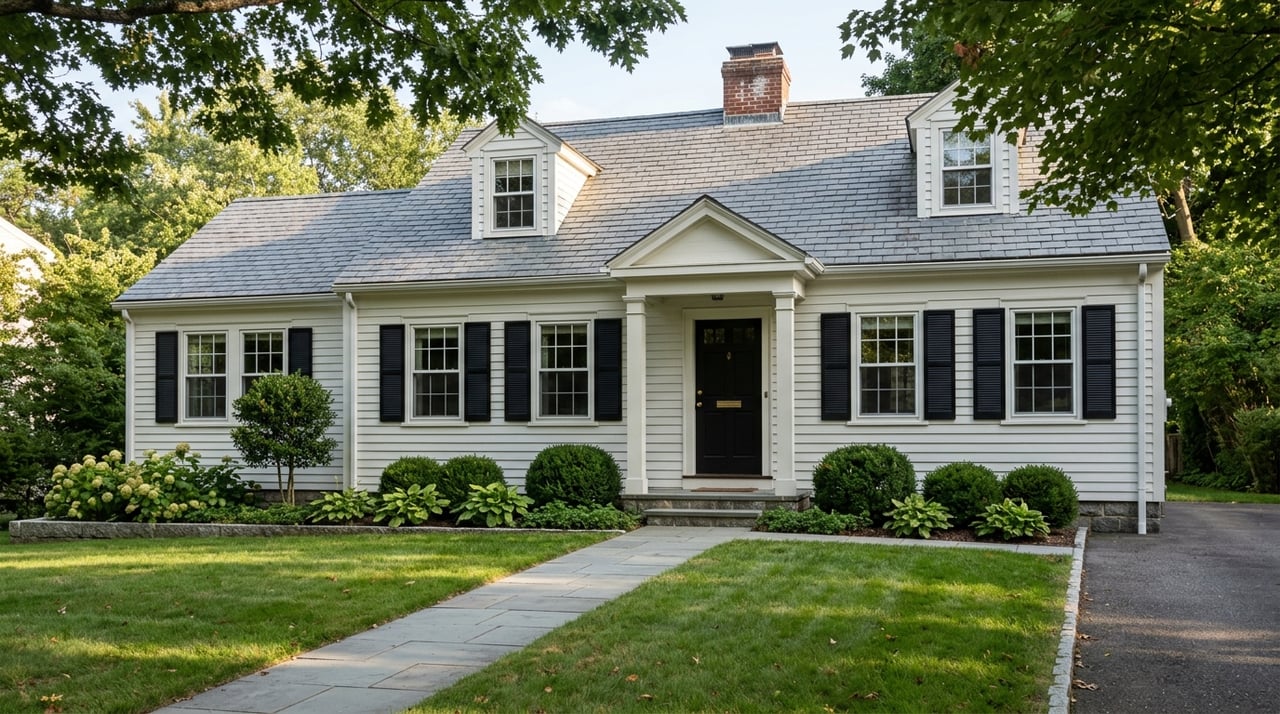
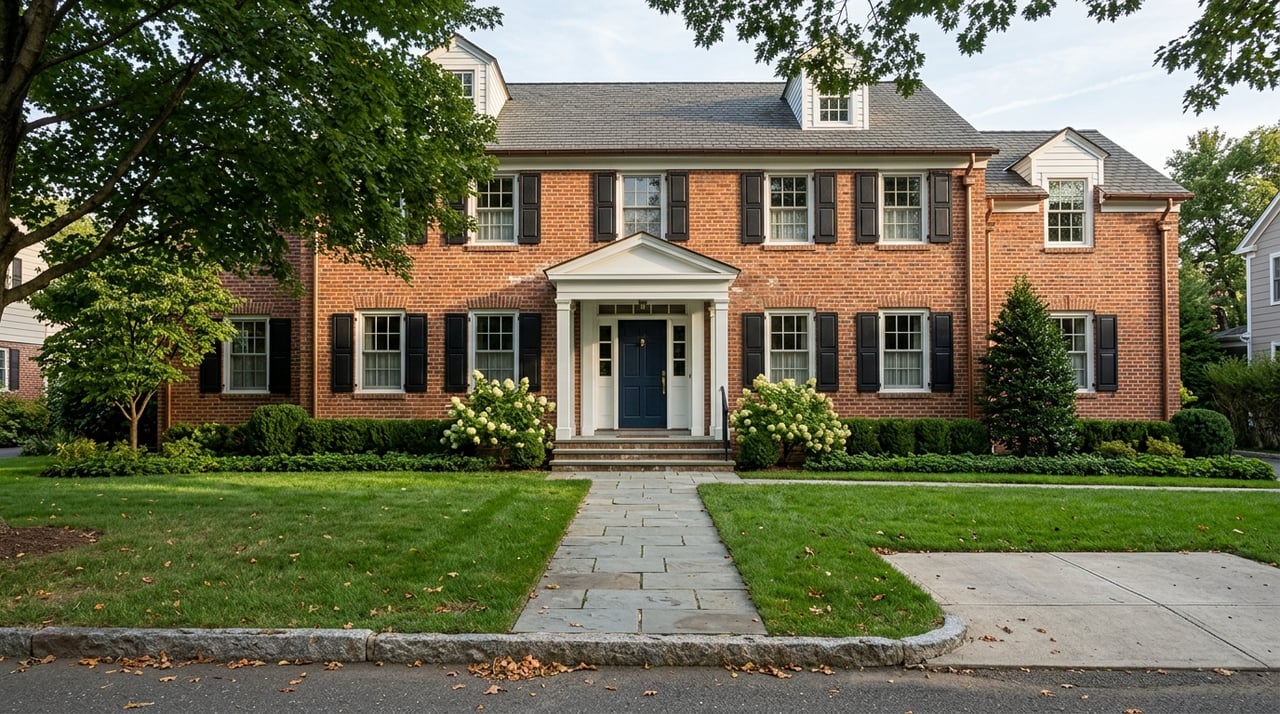
The town’s historical and assessor materials point to a mix that includes colonial-era homes near the center, along with postwar Cape Cods, ranches, traditional two-story colonials, garrisons, Tudors, contemporaries, split-entry homes, raised ranches, Dutch colonials, multi-level split entries, and some larger estate-style houses.
For move-up buyers, that variety creates different paths depending on your goals. You may find an older home with renovation potential, a mid-century layout with a larger footprint than you had in Cambridge, or a newer home built to meet current expectations for size and finishes.
Older homes shape the inventory
Lexington’s age profile is a big part of the story. According to the 2025 housing assessment, about 22% of housing units were built in 1939 or earlier, 24% from 1940 to 1959, and 23% from 1960 to 1979.
That means a large share of the market comes from periods when lot patterns, room layouts, and building systems were very different from what many buyers expect today. As you tour homes, you may be comparing updated older houses, partially improved homes, and properties where a buyer is clearly paying for land and location as much as the structure itself.
Postwar homes are especially common
The postwar building wave left a major mark on Lexington. The town says nearly 1,400 single-family homes were built between 1945 and 1951, though only 726 homes built in the 1940s remain today.
For buyers, that helps explain why capes, ranches, split-levels, and other mid-century forms still show up so often. These homes can offer useful square footage and larger lots, but they may also come with older layouts or systems that deserve careful review during your search.
Lot sizes feel different from Cambridge
One of the clearest practical differences between Lexington and Cambridge is land. Even before you get into any specific listing, the local zoning framework tells you a lot about how the town is built.
Lexington’s zoning bylaw requires a minimum lot area of 30,000 square feet in the RO one-family district and 15,500 square feet in the RS one-family district. It also limits maximum gross floor area based on lot size.
By comparison, Cambridge’s 2025 Annual Housing Review found an average lot size of roughly 5,000 square feet for single-family, two-family, and low-rise multifamily permits. These are not identical measures, but they point in the same direction: Lexington generally offers more yard, more separation, and more room around the house than Cambridge does.
What larger lots mean for buyers
For a move-up buyer, larger lots can change daily life in a meaningful way. You may gain outdoor space, more setback from neighbors, and a property layout that feels less compressed.
Larger parcels can also create more flexibility in how a home functions over time. That could mean a larger existing footprint, better expansion potential within local rules, or simply a site that feels more practical if you are prioritizing storage, recreation, or privacy.
New construction is bigger, but regulated
Some buyers head to Lexington looking for a large replacement home or newer construction. Those options do exist, but the town has also taken steps to manage oversized rebuilds.
The 2025 housing assessment says Lexington first limited the gross floor area of newly constructed single-family homes in 2016 and strengthened those rules in 2023. That came after town data showed new single-family homes averaged 2.74 times the size of the homes they replaced.
This is useful context if you are comparing a teardown candidate with a newer build. Lexington still has substantial homes, but local rules now play a bigger role in how large a replacement house can be relative to its lot.
Why this matters in your search
For move-up buyers, these rules affect value and expectations. A smaller older home on a strong lot may still be attractive, but you should not assume unlimited expansion potential.
It also means that existing larger homes may carry extra weight in the market because they already deliver size that may be harder to replicate under current regulations. In a town like Lexington, understanding the difference between what exists today and what could be built tomorrow is part of buying smart.
How pricing compares with Cambridge and Newton
Price is where many move-up buyers need the clearest framing. The key is to compare the right housing type and the right metric.
Lexington’s FY2026 tax-classification materials say the average single-family home value is $1,639,000. The town’s 2025 housing assessment also says two-thirds of single-family homes are assessed at or above $1.2 million.
Cambridge is a very different detached-home market because single-family homes make up only 6.4% of citywide dwelling units. Cambridge’s open-data sales dataset shows a 2024 median market-rate single-family sale price of $2,315,000.
Newton’s FY2026 assessing materials list a median assessed value of $1,503,500 for a single-family home, while a city finance report lists a 2025 median single-family sale price of $1,850,000. Because these are different metrics, they are not direct apples-to-apples comparisons, but they place Newton and Lexington in the same broad high-price suburban band.
The practical takeaway on cost
If you are moving from Cambridge and specifically want a detached house, Lexington may offer a more suburban single-family product at pricing that generally sits below Cambridge’s detached-home market. At the same time, Lexington is still firmly an upper-tier suburban market.
In plain terms, you may get more house type and more land than in Cambridge, but you are not stepping into an easy-entry price point. The move tends to work best when you are intentionally paying for space, lot size, and a different living pattern.
Commute expectations from Lexington
Move-up buyers often ask the same question: can I still make Lexington work if I commute to Cambridge or Boston? The answer is usually yes, but the pattern changes.
Lexington describes itself as connected to Routes 95/128, Route 2, Routes 4/225, and Route 2A. For transit access, MBTA bus routes 62 and 76 connect to Alewife in Cambridge, and local options include Lexpress, REV/GRID shuttles, Route 77 near East Lexington, Route 61 near South Lexington, and the Minuteman Bikeway to Alewife.
That means Lexington is best understood as car-first but transit-supported. If you are used to inner-core walkability or direct rail access, this is a different setup, but it still provides workable connections into Cambridge and Greater Boston.
What this means day to day
Your commute strategy may depend more on driving, bus connections, shuttles, or biking than it does now. That does not make the move impractical, but it does mean you should evaluate homes with your actual weekly routine in mind.
When buyers make this transition successfully, they usually accept that they are trading some immediacy for a different housing product. More space often comes with a more planned commute.
What move-up buyers should focus on
When you evaluate Lexington single-family options, keep your search centered on a few practical questions:
- Housing style: Do you want a colonial, cape, ranch, split-level, or a newer home with a larger layout?
- Home age: Are you comfortable with older systems or renovation work, or do you want a more updated property?
- Lot use: Is your priority yard space, more separation, or flexibility for future changes within town rules?
- Commute pattern: Will driving, bus-to-Alewife access, or biking fit your workweek?
- Budget reality: Are you comparing detached-home pricing correctly, especially against Cambridge’s limited single-family market?
These questions can help you filter listings more effectively. In a competitive, high-value town, clarity matters.
Why local context matters
A Lexington search is not just about square footage. It is about understanding how housing age, lot size, zoning, and commute tradeoffs intersect.
That is especially true if you are coming from Cambridge, where the housing stock, parcel sizes, and transportation habits are often very different. A data-driven comparison can help you decide whether the move actually improves your day-to-day life, not just your property specs.
If you are weighing a move from Cambridge to a larger single-family home in Lexington, working with someone who understands both markets can help you compare options more clearly and act with confidence. To talk through your goals and timing, schedule a Cambridge market consultation with Nathan Long.
FAQs
What types of single-family homes are common in Lexington?
- Lexington’s housing stock commonly includes colonials, capes, ranches, split-entry and raised-ranch homes, multi-level split homes, contemporaries, and some older colonial-era homes near the town center.
Are Lexington lots bigger than Cambridge lots?
- In general, yes. Lexington’s one-family zoning districts require minimum lot areas of 15,500 or 30,000 square feet, while Cambridge’s 2025 housing review reported average lot sizes of about 5,000 square feet for single-family, two-family, and low-rise multifamily permits.
Is Lexington more affordable than Cambridge for detached homes?
- Lexington’s average single-family assessed value is lower than Cambridge’s 2024 median single-family sale price, but both markets are expensive. The main difference is that Lexington has a much larger detached-home inventory.
Is commuting from Lexington to Cambridge manageable?
- Usually yes, but it is a different pattern from living in Cambridge. Lexington relies more on driving, bus connections to Alewife, local shuttles, and the Minuteman Bikeway than on direct rail access.
Are teardown and rebuild opportunities unrestricted in Lexington?
- No. Lexington has rules that limit gross floor area for newly constructed single-family homes, and those rules were strengthened in 2023 to better manage oversized replacement houses.